
It might be hard to imagine, but some places that were once utterly packed with tourists now sit quiet and barren. If you’ve ever wondered what happens to tourist hotspots after the world moves on, here’s a glimpse into the silence they leave behind.
Bodie, California

You wouldn’t guess it now, but Bodie was once full of gold miners and fortune seekers. Back in the late 1800s, it wasn’t unusual to hear pianos playing in saloons or see horse-drawn wagons rolling down the dirt roads. Today, all that noise is gone. What’s left is a ghost town preserved in what’s called “arrested decay.” Buildings still stand, their wood weathered gray, and broken windows let the wind whistle through.
Varosha, Cyprus

There was a time when Varosha felt like the ultimate beach getaway. Celebrities vacationed here, and its hotels were some of the most luxurious in Europe. Then, overnight in 1974, everything changed. Due to political conflict, the entire area was fenced off and left untouched.
What’s strange is how much still remains – rusted cars, sun-bleached furniture, and forgotten storefronts frozen in place. Even though the beaches are still stunning, you won’t find tourists laying out towels here anymore.
Hashima Island, Japan

Locals called it Gunkanjima, or “Battleship Island,” because of its shape. What made it famous was coal. Thousands of workers lived crammed together on this tiny island, filling its apartments, schools, and shops. By the 1970s, the coal dried up, and everyone had to leave. Stepping onto Hashima now feels like visiting a concrete skeleton.
Pripyat, Ukraine
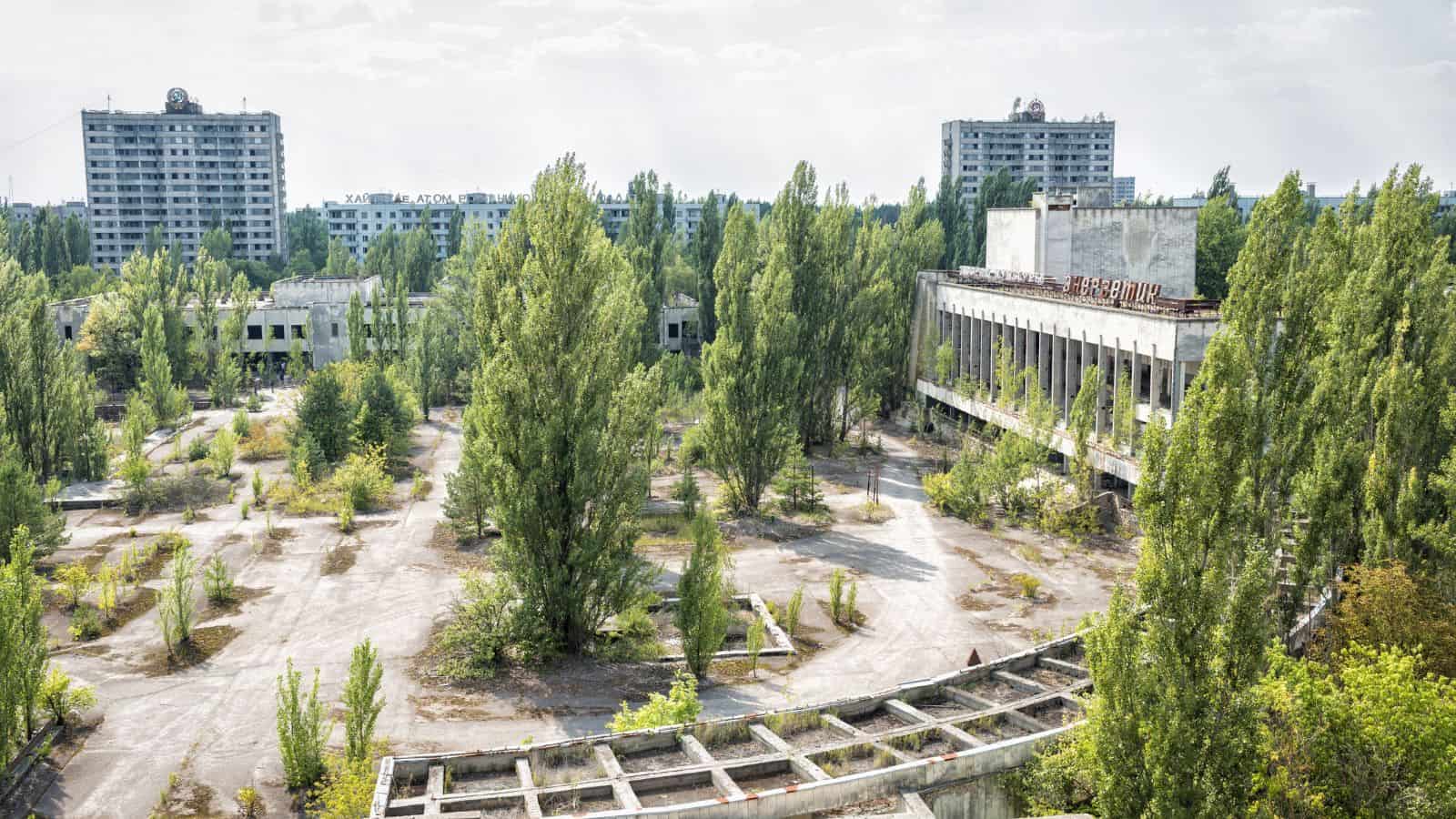
Most folks know Pripyat because of the Chernobyl disaster in 1986. This wasn’t some small town – it was a planned city with schools, an amusement park, and swimming pools, all built for workers at the nuclear plant. After the explosion, residents had just hours to grab what they could and evacuate. Decades later, rusted bumper cars sit under peeling paint, and buildings sag under the weight of time.
Bannerman Castle, New York

Hidden on an island in the Hudson River, Bannerman Castle looks like something straight out of a fairytale. Back in the early 1900s, it was a bustling storage site for military surplus, built by businessman Francis Bannerman.
Over the years, fires and storms wore it down, and eventually, visitors stopped coming altogether. Now, ivy crawls up crumbling walls, and parts of the structure have completely collapsed. You can still visit by boat, but most days, the island sits quietly under the sun.
Kolmanskop, Namibia

Once a booming diamond mining town in the middle of the desert, Kolmanskop had luxury homes, a hospital, even a bowling alley. It’s wild to think all that existed in such a remote place. After the diamonds ran out, so did the people. Today, wind-blown sand fills the empty rooms, creeping up walls and swallowing doorways. Photographers love it, but otherwise, it’s just dust and silence.
Fordlandia, Brazil

Way back in the 1920s, Henry Ford tried to build his own rubber-producing town deep in the Amazon. It wasn’t just a work site – he planned homes, schools, even golf courses. Problem was, things didn’t exactly go as planned. Workers struggled with unfamiliar rules, rubber trees didn’t thrive, and the project eventually flopped. What’s left now is a handful of crumbling buildings surrounded by thick jungle.
Salton Sea Resorts, California

Driving past the Salton Sea, you wouldn’t believe it was once a glitzy vacation spot. In the 1950s and ’60s, speedboats raced across the water and families lounged on the shore.
Over time, though, the lake became polluted and fish started dying off, leaving behind a bad smell and worse headlines. The hotels and marinas shut down, one after another. Now, it feels post-apocalyptic – peeling billboards, graffiti-covered walls, and empty streets where music once echoed from beach parties.
Oradour-sur-Glane, France

There’s a stillness here that hits different. Oradour-sur-Glane was left just as it was after a terrible event in 1944, when German soldiers destroyed the village and killed nearly everyone. Instead of rebuilding, France chose to keep it as a memorial. Burned-out cars still sit in the streets, and rusted bicycles lean against cracked walls.
Kennecott Mines, Alaska

Way up in Alaska’s Wrangell-St. Elias National Park, Kennecott was once a thriving copper mining operation. Workers lived here year-round despite the harsh winters, building homes, schools, and towering red mill buildings that still stand today. Eventually, the copper ran out, and folks moved on. These days, the silence is broken only by the wind through broken windows and the occasional visitor snapping photos.
Craco, Italy

Perched on a hilltop, Craco looks like something out of a storybook – until you notice it’s completely empty. Landslides and earthquakes forced people to leave decades ago, leaving behind rows of stone buildings, a bell tower, and winding streets now filled only with dust. Some films have used Craco as a backdrop, but outside of that, hardly anyone visits.
Six Flags New Orleans, Louisiana

Once buzzing with roller coasters and screaming kids, Six Flags New Orleans has sat abandoned since Hurricane Katrina hit in 2005. The storm caused major flooding, leaving rides rusting and paint peeling.
Walking through today feels like something out of a movie – weeds growing through the pavement, empty concession stands, and roller coasters standing still, frozen mid-loop. It’s fenced off, but that hasn’t stopped curious explorers from sneaking in to see what’s left. The energy it once had is long gone.
Beelitz-Heilstätten, Germany

Before it became an eerie spot for photographers, Beelitz-Heilstätten was a massive hospital complex. Originally built to treat tuberculosis patients, it later served as a military hospital during both world wars. Over time, the buildings were abandoned. Now, ivy snakes up cracked walls, and empty hallways stretch for what feels like miles.
Plymouth, Montserrat

After a volcano erupted in the 1990s, much of Plymouth, the capital city of Montserrat, was buried under ash. Streets, homes, and government buildings disappeared beneath layers of gray dust and rock. Today, what sticks out of the ash looks like something from another planet – a church steeple here, the top floor of a building there. People left in a hurry, and few ever came back.
Houtouwan, China

At first glance, Houtouwan looks like any other village on a lush green hillside. Then you notice the houses completely swallowed up by plants. This once-busy fishing village on Shengshan Island was abandoned in the 1990s after it became too hard to get supplies out there. Over the years, nature stepped in. Vines cover rooftops, and thick greenery pushes through windows and doors.
Pyramiden, Norway

Sitting far up in the Arctic, Pyramiden was a Soviet mining town on the island of Svalbard. It had schools, swimming pools, even a concert hall. When the mine closed in the late ’90s, everyone left. Now, it’s one of the world’s most remote ghost towns. Snow piles up in abandoned gymnasiums, and polar bears sometimes wander through.
Hotel del Salto, Colombia

Right on a cliffside overlooking Tequendama Falls, Hotel del Salto once welcomed wealthy guests looking for a scenic getaway. Over time, though, pollution in the river and changes in travel trends meant fewer visitors showed up. The hotel eventually closed, leaving behind tall windows, grand staircases, and a view most people would now only see in photos. Locals say it’s haunted, adding to the eerie atmosphere.
This article may include content generated by AI and has been reviewed and edited by our editorial team for accuracy and clarity.